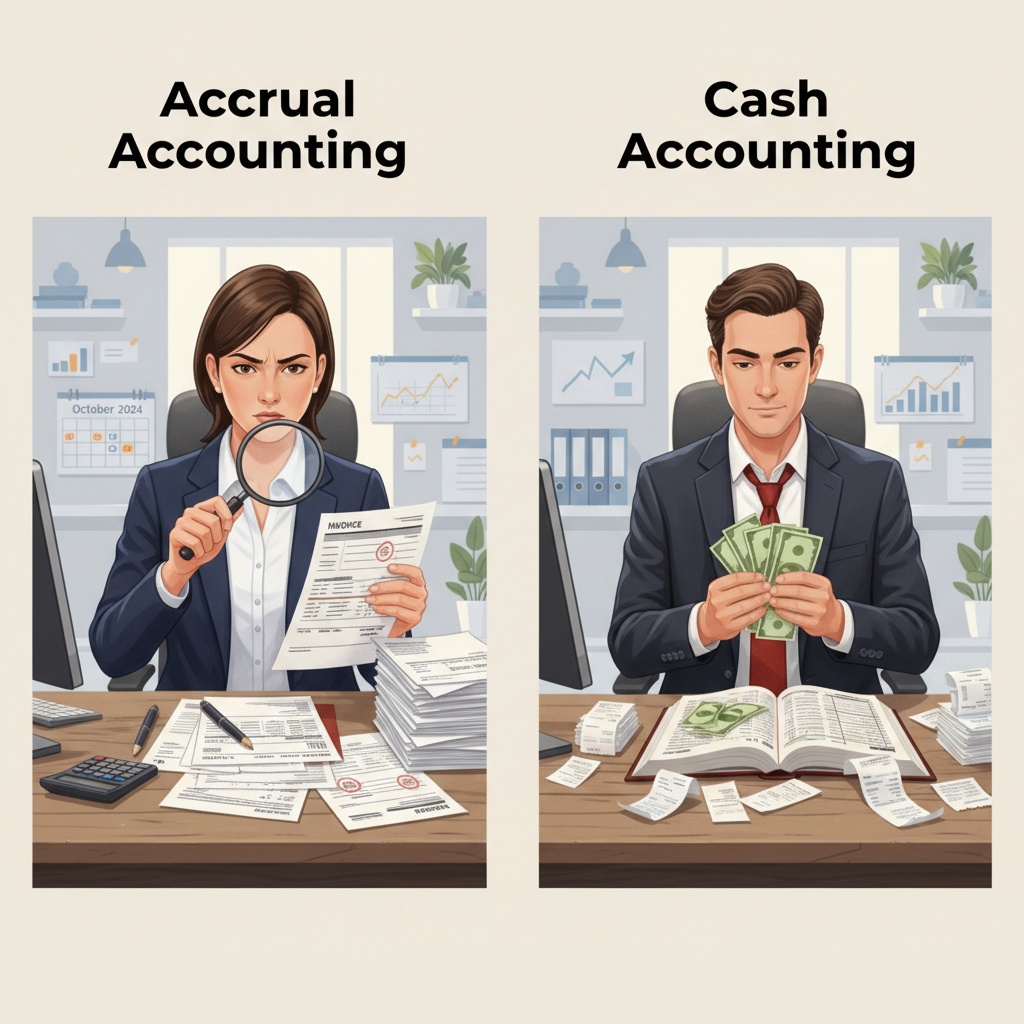
Accrual accounting is the standard financial reporting method for most businesses by 2026. Unlike cash accounting, which only records transactions when money changes hands, the accrual method tracks financial events in real time.
Here is everything you need to know about how accrual accounting works, why businesses use it, and how it looks in practice.
What is Accrual Accounting?
Accrual accounting is a financial accounting method that records revenues and expenses when they are earned or incurred, regardless of when the cash is actually exchanged.
This method is governed by two foundational accounting principles:
- The Revenue Recognition Principle: Revenue is recorded when a service is provided or a product is delivered, not when the customer pays the invoice.
- The Matching Principle: Expenses must be recorded in the same reporting period as the revenues they helped generate.
Key Benefits of Accrual Accounting
While accrual accounting requires more effort than tracking cash flow, it provides significant advantages for growing businesses.
- Accurate Financial Picture: It reflects true economic reality by showing actual sales and liabilities within a specific month or year.
- Better Long-Term Planning: Management can analyze profitability trends without the distortion of timing gaps in cash receipts.
- Compliance and GAAP: It is required for publicly traded companies and businesses of a certain size under Generally Accepted Accounting Principles (GAAP) and International Financial Reporting Standards (IFRS).
- Investor and Lender Appeal: Banks and investors prefer accrual statements because they offer a transparent look at a company’s financial health and future revenue pipeline.
Practical Examples of Accrual Accounting
To see how this works in a business setting, consider these two common scenarios for revenue and expenses.
Example 1: Recording Revenue (Accrued Revenue)
Imagine an IT consulting firm lands a project contract in January.
- January: The firm completes the work and sends a R50,000 invoice to the client. Under accrual accounting, the firm records R50,000 in revenue in January, even though no cash has been received.
- February: The client pays the invoice. The firm records the cash coming in and reduces its accounts receivable, but no new revenue is recognized in February.
Example 2: Recording an Expense (Accrued Expense)
A retail store uses electricity throughout the month of December to keep its doors open.
- December: The store incurs the utility expense but will not receive the bill until January. Under the matching principle, the store estimates and records the utility expense in December because that is when the energy was used to generate sales.
- January: The store receives and pays the R5,000 bill. The cash outflow happens now, but the expense remains tied to December’s financial statement.
Accrual vs. Cash Accounting: The Core Difference
The primary difference comes down to timing. Cash accounting gives you a literal view of your current bank balance, which is helpful for micro-businesses with immediate transactions. However, for any business handling inventory, offering credit terms to customers, or managing long-term contracts, accrual accounting is essential to prevent misleading spikes and drops in perceived profitability.